
The Incomplete Justice of Coincidence
The AxWrong explanations, accidental links, and partial truths repeatedly shape how victims’ deaths are understood by investigators and family members.
increasing Bearing strength in each event
 decreasing
Bearing strength in each eventdecreasingA Crime Not in the News
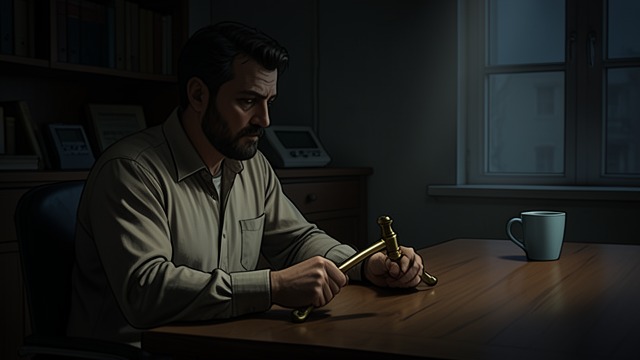
A Crime Not in the News
No Immediate Public Account
Burke does not see Everly’s death reported in the news he follows. He assumes the killing has remained local and unnoticed by people who know him.
Silence Encourages Risk
The absence of visible coverage gives Burke no reliable information about the investigation. He treats not hearing about consequences as evidence that consequences do not exist.
The Ricks Story Fits
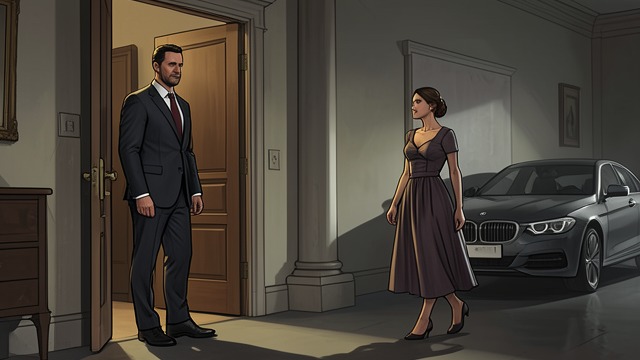
The Ricks Story Fits
A Plausible Suspect
Ringer’s relationship with June supplies a motive that appears to explain the Ricks murders. His later suicide makes the story seem complete to observers.
The Wrong Conclusion
The narrative closes around Ringer despite Burke’s responsibility. Coincidence and apparent motive replace a full investigation, leaving the true story hidden.
The Accident Report
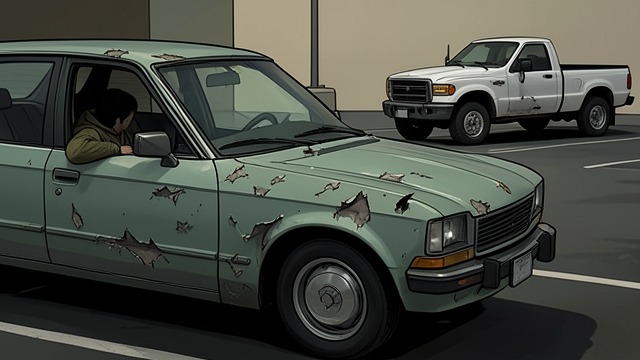
The Accident Report
A Manufactured Explanation
Burke uses a collision with a pickup to account for damage to his vehicle after killing Dynes. Witnesses and the resulting report support the account he presents.
Facts With More Than One Use
The report is genuine, but Burke has engineered the circumstances around it. The same administrative document that should record an accident helps him obscure a murder.
Exman Becomes the Suspect
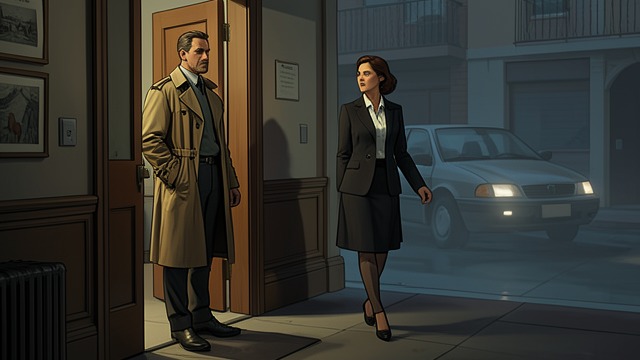
Exman Becomes the Suspect
A Disappearance Interpreted
Burton tells Burke that Exman vanished after the detective’s visit. Exman’s guns and troubled personal life support the police theory that he may be responsible.
An Explanation That Protects the Killer
Burke listens as the investigator assigns the crimes to a dead man. The case’s plausible but false direction demonstrates how evidence can be arranged into a convincing error.
The Real Call and the False Pattern
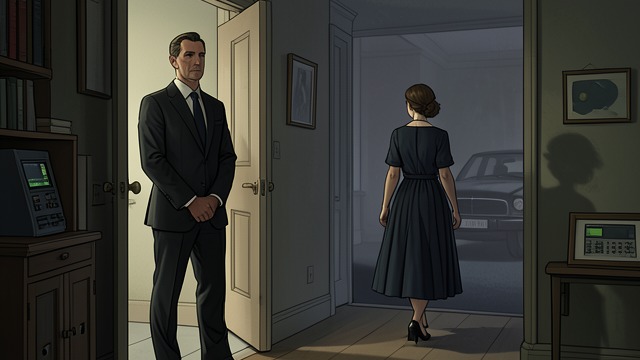
The Real Call and the False Pattern
Arcadia’s Vacancy
Burke receives a genuine invitation to interview for a position opened by Fallon’s death. The employer’s practical need creates a real consequence from his crimes.
Burton’s Different Story
Burton continues to pursue Exman as the likely killer, while Burke prepares to interview. Two narratives advance at once: the actual vacancy and the mistaken explanation of the murders.
After May 8, 1997
May 15–late May 1997
Late May 1997
July 3, 1997
July 1–3, 1997
